5 hr
San Juan Bioluminescent Bay Night Kayak Tour
Paddle a mangrove-lined lagoon after dark and watch glowing plankton light up the water.
Reserve
Hand-picked by our editors — only the best 5 Vieques Bioluminescent Bay Tour From San Juan tours from 60 reviewed.
Verified partners for every tour, free cancellation where available, and instant confirmation on every booking.
5 hr
Paddle a mangrove-lined lagoon after dark and watch glowing plankton light up the water.
Reserve
5 hr
Paddle Laguna Grande's glowing waters by night on a guided mangrove kayak adventure from San Juan.
Reserve
3 hr
Paddle through mangrove tunnels into Laguna Grande and watch the water glow under the stars.
ReservePrices from verified partners. Availability updates in real time at checkout. Free cancellation policies apply where shown.
The landmarks, rooms, and views travelers on this tour remember — all visible on a single visit.
The narrow mangrove-lined channel is the signature approach to the bioluminescent water and helps create a darker corridor for the glow. Visitors often paddle or ride a small boat through this stretch before entering the luminous lagoon. The route is short, but the vegetation creates a very different feel from open-water tours.
From the Fajardo side, rainforest-country scenery is part of the backdrop, especially on east-coast approaches toward the reserve. The area sits near El Yunque’s watershed, which helps explain the lush coastal vegetation around the launch zones. Evening light over the trees gives the trip a strong sense of place.
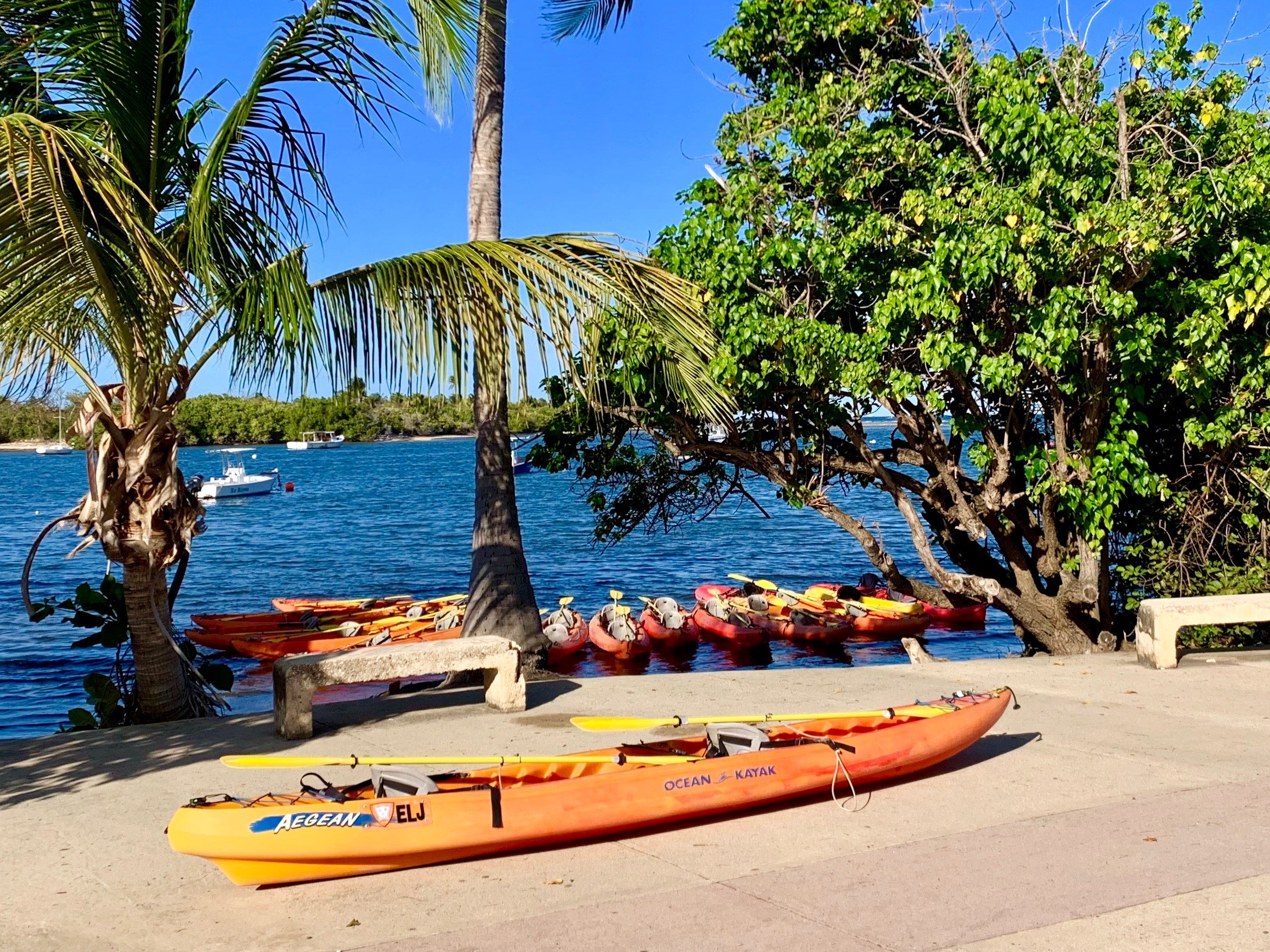
Las Croabas is the practical gateway used by many Laguna Grande operators, with docks, staging points, and nearby food kiosks. It is a compact waterfront zone, so guests usually meet here before moving to the water. The setup is more functional than scenic, which makes timing and organization important.
The bioluminescent water is caused by dinoflagellates that flash when disturbed, creating the blue-green sparkle people come for. The effect is strongest in dark conditions, especially when moonlight is limited. Even a hand moving through the water can trigger visible light.
The reserve protects multiple ecosystems, and Laguna Grande sits within that broader natural landscape. This is why the attraction is often described with both reserve and lagoon terminology. The protected setting helps explain the controlled access and guided-visit format.
The most dramatic viewing conditions tend to come on moonless nights, when ambient light is low enough for the glow to stand out. That timing detail matters more than daytime weather for this attraction. A darker sky can make even small ripples on the surface look animated.
They complement each other, but most visitors who compare the two say Mosquito Bay is the more dramatic glow while Laguna Grande is the easier San Juan-area outing for a shorter trip. If you want the stronger bioluminescence and can handle island logistics, choose the vieques bioluminescent bay tour from san juan; if you want simpler access, Laguna Grande wins.
| Feature | Top pick Laguna Grande | Mosquito Bay |
|---|---|---|
Total travel time |
1–2 hours from San Juan | 4–11 hours from San Juan |
Access from San Juan |
45–60 min drive to Fajardo | Ferry or small plane |
Tour length |
1–2 hours on water | 40 min–2.5 hours on water |
What you paddle through |
Mangrove canal into lagoon | Open bay; kayak only |
Brightness reputation |
Glows well; most visited | World's brightest; Guinness record |
Best fit |
Shorter night outing | Biggest-glow seekers |
| See tickets → |
Verdict: Choose Laguna Grande for the shorter, simpler outing, and pick Mosquito Bay if you want the brightest-renowned glow and do not mind a longer day around the vieques bioluminescent bay tour from san juan.
Choose your ticket, select your date, and reserve in under two minutes. Secure checkout handled by our verified partner.
Instant confirmation by email, with a mobile voucher you can save offline. No printing, no queuing at a collection desk.
Arrive at the entrance, show your voucher on your phone, and walk in. Most tickets include priority or skip-the-line access.
Practical details for your visit straight from our verified partners — hours, access, rules, and how to get there.
Wear quick-dry clothing and closed-toe water shoes or strap sandals, since tours typically launch from the Las Croabas/Fajardo area and involve walking on wet surfaces. A light long-sleeve layer helps after sunset when the breeze picks up on the mangrove channel.
Pack light and keep valuables to a minimum, because most operators move guests from a staging area to kayaks or small boats. Use a waterproof pouch for keys, ID, and a phone if you need to carry one on the water.
Low-light photography is difficult here, and the glow is easiest to see with your eyes rather than a flash. Avoid flash use so you do not wash out the bioluminescence or disrupt other guests.
Laguna Grande is reached through a narrow mangrove channel, so access depends on the tour format you book and the operator’s launch point. Guests with mobility concerns should ask in advance about kayak entry height, dock surfaces, and whether a boat-based option is available.
Keep your phone in a waterproof case if you bring it, since spray and humidity are common on the channel. If you want photos, use the phone sparingly and rely on night mode; the glow is subtle and can be lost with bright screens.
Families should plan for a nighttime outing with paddling or small-boat movement, which is better suited to children who can follow safety instructions. Because the water is protected, swimming is not permitted at Laguna Grande, so the experience is observation-focused rather than a swim stop.
Eat before you go, because the attraction itself is a night-water experience and not a dining venue. Water is the safest drink to carry, and you should avoid glass containers on launch docks and in kayaks.
Pets are a poor fit for a nighttime kayak or small-boat bio-bay outing, and most tour operators do not allow them on the water. If you are traveling with a service animal, confirm the operator’s policy before booking.
Laguna Grande is technically a lagoon, not a bay, which is why some sources describe it that way even though the attraction name uses bay. The glowing effect is stronger on moonless or low-moon nights, so planning around the lunar phase matters more here than a daytime sightseeing schedule.
Best time to go, insider tips, nearby landmarks, and the cancellation fine print — flip through to skim what matters to you.
Flexible, no hidden fees.
Tour operators set their own cancellation rules, so check the specific booking terms before purchase. For the attraction itself, the entrance fee is 0 USD, with tours sold separately.
Mosquito Bay on Vieques carries roughly 700,000 dinoflagellates per gallon of water, a density that earned it a Guinness World Records entry as the brightest bioluminescent bay ever measured. Vieques sits eight miles off Puerto Rico's east coast, reached by ferry from Ceiba or a light aircraft. Geography explains the rest: most Vieques Bioluminescent Bay Tour From San Juan tours in fact paddle Laguna Grande, the lagoon inside Fajardo's Reserva Natural Cabezas de San Juan. The glow itself belongs to Pyrodinium bahamense, a single-celled alga that flashes cold blue when water moves against it. The mechanism is chemical — luciferin oxidised by luciferase — and each burst lasts under a second. Laguna Grande holds the population because a narrow mangrove channel slows tidal flushing, keeping the water warm and enclosed. Red mangrove roots feed the organisms vitamin B12. Puerto Rico shelters three such lagoons: Mosquito Bay, La Parguera in Lajas, and this one, the bahía bioluminiscente of Fajardo. The reserve around it covers some 316 acres of headland where seven ecosystems meet: dry forest, coral reef, seagrass, sand dune, mangrove, lagoon and beach. El Faro, the neoclassical lighthouse crowning the point, was completed in 1882 under Spanish colonial administration and remains one of the oldest still standing on the island. The Conservation Trust of Puerto Rico acquired the headland in 1975, and Para la Naturaleza has managed the land since. Hurricane María stripped the mangrove canopy in September 2017; the tunnel of leaves above the channel has grown back in the years since, and with it the darkness the organisms require. Brightness is not guaranteed anywhere. Moonlight, rainfall and the marina lights of Fajardo all suppress what the eye can register, which is why the darkest nights of each lunar cycle remain the ones guides prefer. Mosquito Bay dimmed almost to nothing after 2017 and recovered over the following year, a reminder that these lagoons are living systems rather than fixed attractions. Guides read the brightness as a health index, and a lagoon that answers dimly is a lagoon under some form of stress. Vieques still holds the record; a Vieques Bioluminescent Bay Tour From San Juan tour, in the everyday sense the phrase has acquired, most often means a night paddle at Laguna Grande, close enough to the capital to make the crossing unnecessary and dark enough to make it worthwhile.
"The lagoon does not glow on its own; it answers the paddle."
A step-by-step walkthrough of the visit — what you'll see, how long each stage takes, and the details that matter.
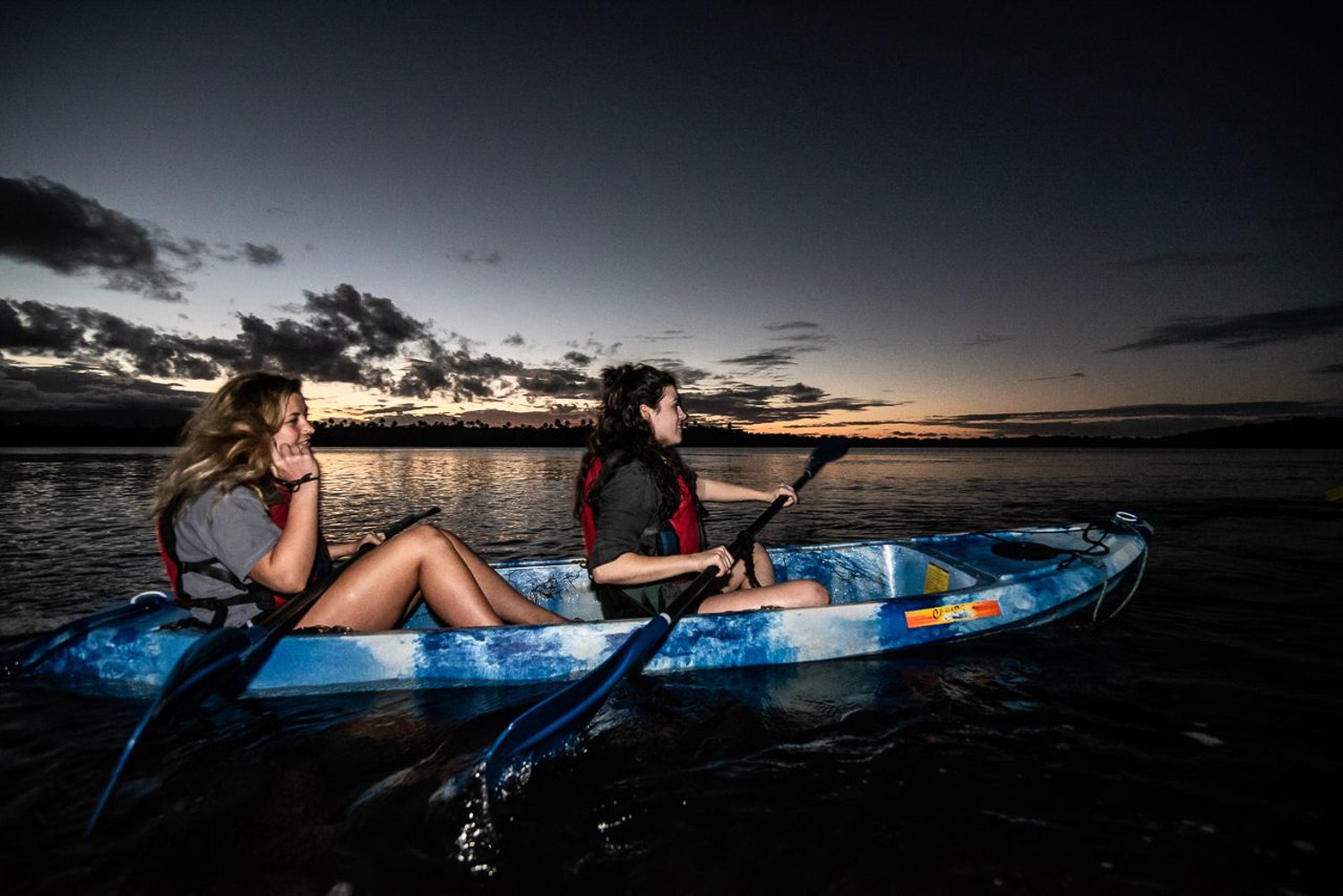
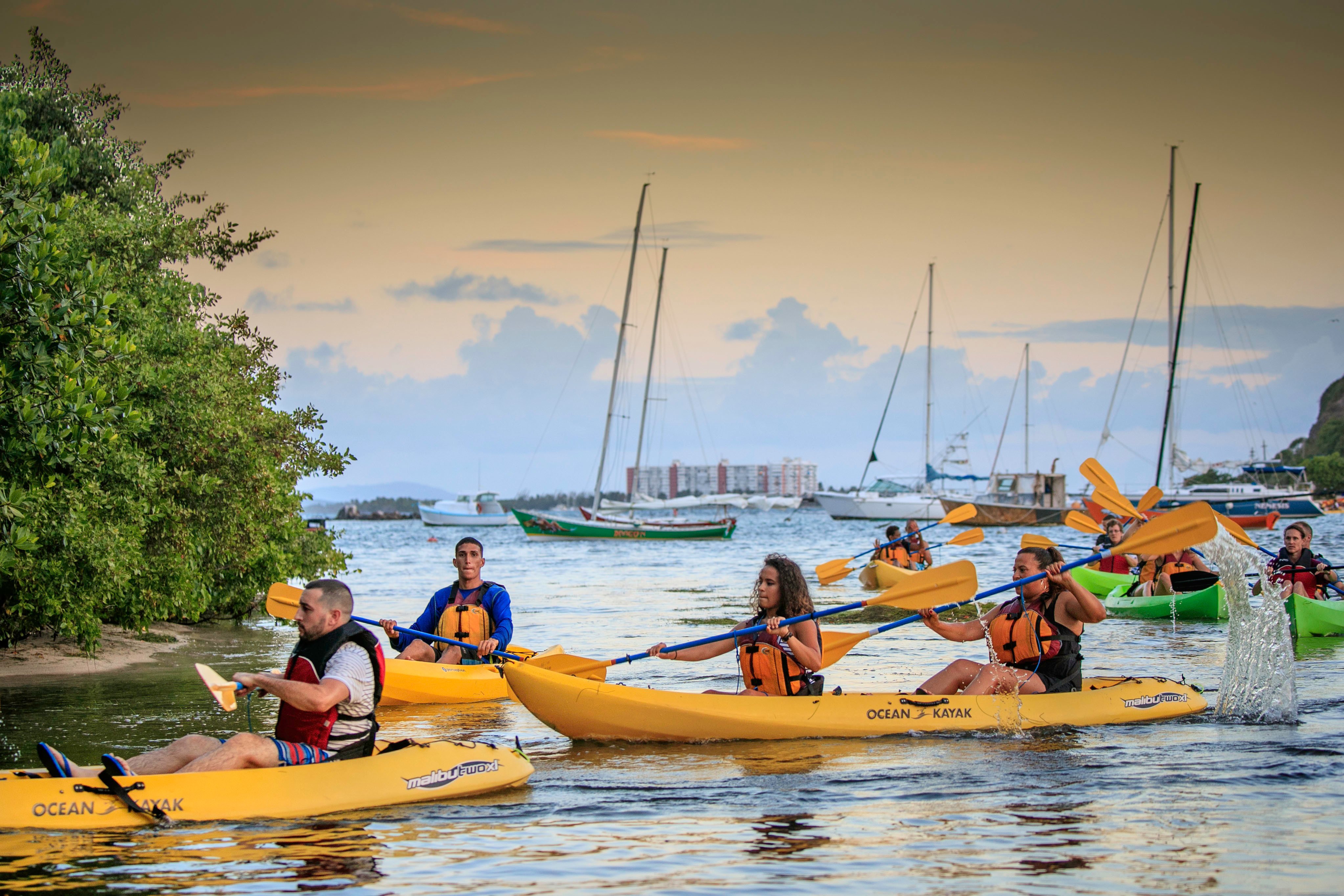
Your Vieques Bioluminescent Bay Tour From San Juan tickets are already sorted, so the evening begins simply: a van pulls up outside your hotel, and the coastal road east empties out as the light goes. At the boat ramp you trade shoes for water sandals and take a numbered paddle. The guide runs the briefing in two languages — how to steer, how to raft up, why every light gets switched off. Then you push into the channel. It is barely wider than two kayaks in places, roofed by mangrove branches that close overhead like a low ceiling. You follow the glow stick on the hull ahead of you until the tunnel opens. The lagoon is a wide black plate. You lift the blade and the drops fall back as blue sparks. Trail a hand and it leaves a comet behind it. Fish crossing under the hull draw green lines you can follow for several seconds. Guides gather the group in a circle, name the constellations overhead, then stop talking so the water can be heard instead. The paddle back is quieter. Your arms register the distance now, and the mangrove closes in again. At the ramp you rinse the salt off, load the kayak, and sleep most of the way home.
Laguna Grande’s listed hours are Monday through Sunday, Closed, so the attraction itself does not have a public daytime opening schedule. Tours are separate products, and the best arrival window quoted for the bay area is 19:00–21:00 for darker skies.
Laguna Grande is best handled as a guided water excursion, because the channel and bay are accessed through tour operator launch points rather than a simple walk-in visit. If mobility is a concern, ask the operator about kayak entry height, dock surfaces, and whether a boat-based option is available.
Carry only essentials in a small waterproof bag, because you will be moving from a staging area to the water and space in kayaks or small boats is limited. Flashlights, speakers, and other bulky items are poor fits for a dark, quiet bio-bay setting.
Yes, but flash is not a good idea because it can flatten the glow and affect nearby guests. Use night mode, keep your screen dim, and expect the brightest result to be what you can see in person rather than what the camera captures.
The glow is usually best on moonless or low-moon nights, which is why the attraction recommends arriving between 19:00 and 21:00 when skies are darkest. Weather and cloud cover also matter, so an already-dark night can still vary in brightness.
Wear quick-dry clothing, water shoes, and a light layer for after sunset. The route includes wet launch areas and a mangrove channel, so footwear and clothing that dry fast are more practical than denim or bulky layers.
Stick to simple snacks or water before the outing, because the attraction is not a dining venue and the watercraft setting is not suited to a full meal. Avoid glass containers and anything that could spill or create trash on the launch dock.
From San Juan, the mainland drive to Fajardo is commonly about 45 minutes to one hour depending on traffic, and Discover Puerto Rico also describes Laguna Grande as one of the easiest bio-bays to reach from San Juan. For the actual bay visit, operators then manage the final launch in the Las Croabas/Fajardo area.
Families can do the experience if children are comfortable following safety instructions and sitting through a nighttime paddle or boat ride. Swimming is not permitted at Laguna Grande, so the outing is observation-based rather than a swim adventure.
Entrance to the natural area is listed as 0 USD, but tours are sold separately and cancellation terms depend on the operator you book. Read the specific tour policy before paying, because weather-related changes are usually handled by the operator rather than the attraction itself.
Seven Seas Beach, the Cabezas de San Juan Nature Reserve, and Fajardo’s coastal areas are the most natural add-ons if you are building a day around Laguna Grande. If you want a fuller east-coast day, San Juan, Luquillo, and Río Grande also fit a multi-stop itinerary.